
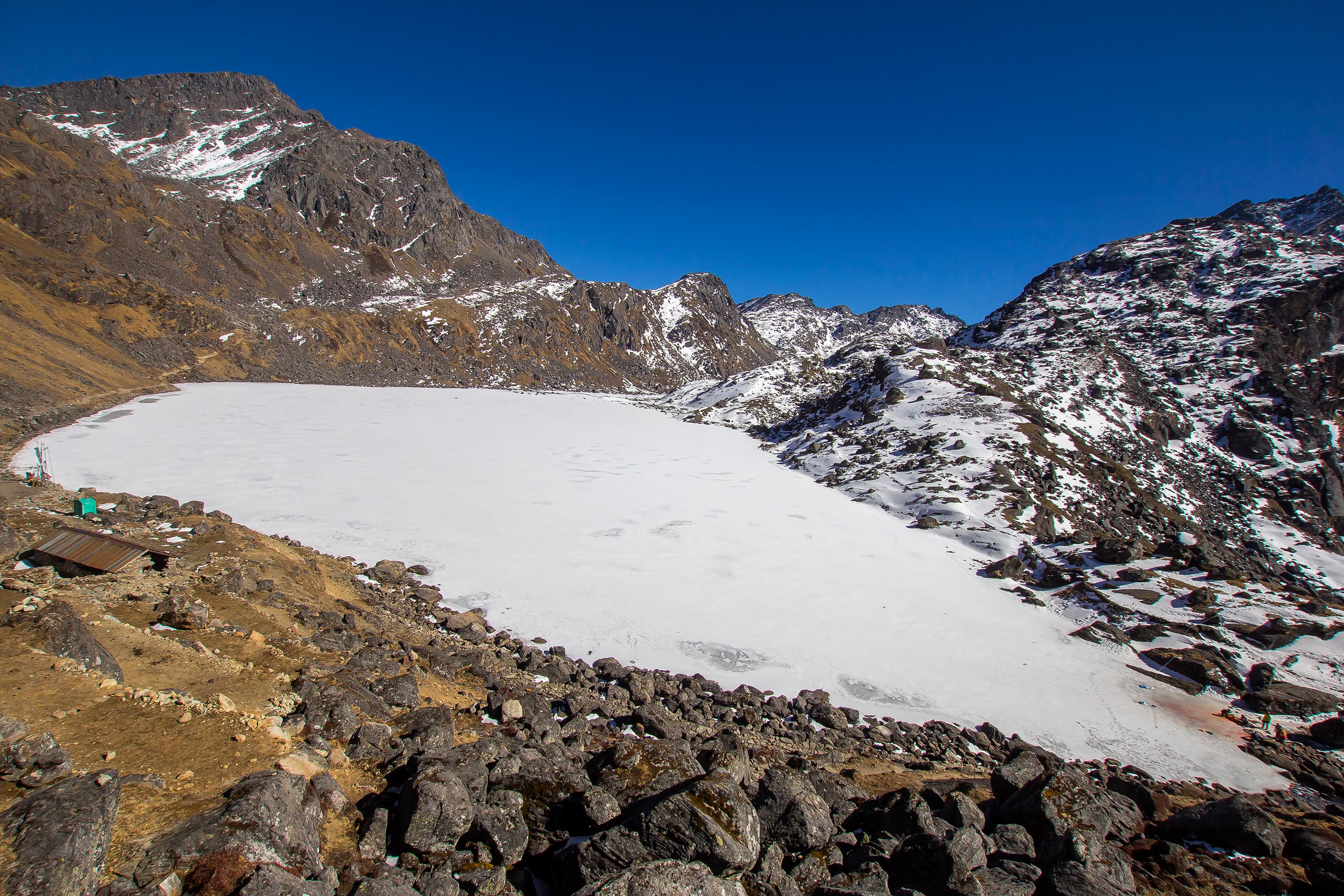
Bhairab Kund
A glacial lake where Tantric devotion meets the high Himalayan frontier
28.0804°N · 85.4074°E
About
Why visit Bhairab Kund
At roughly 4,200 metres on the border ridge between Nepal and Tibet, Bhairab Kund sits in a bowl of rock and thin air that feels genuinely remote even by Himalayan standards. The lake takes its name from Bhairab — the fierce, skull-garlanded manifestation of Shiva — and the association is not decorative. Pilgrims have been making the approach for centuries, and the religious atmosphere here is less curated than at more accessible shrines. Small stone structures and prayer flags mark the shoreline, and offerings accumulate at the water's edge with no management infrastructure to tidy them away. The approach from the Sindhupalchok district side involves a multi-day walk through mid-hill terrain that transitions sharply into alpine meadow and then bare scree. Villages along the route — largely Tamang and Sherpa communities — maintain the trail primarily for their own seasonal movements and for the pilgrim traffic that peaks around Janai Purnima in late July or August, when the lake draws the largest concentrations of devotees from both Nepal and the Tibetan side of the border. The lake itself is small and dark, fed by snowmelt, and freezes over in winter. Its surface reflects the surrounding ridgeline with an unsettling clarity on calm mornings. The border location means the political geography is as significant as the physical one — this is a crossing point with historical depth, and the terrain carries the particular quality of places that have served as thresholds between cultures and states for a long time. Wildlife in the surrounding area includes Himalayan tahr and various high-altitude birds, though the ecosystem is fragile and the pilgrimage season concentrates considerable foot traffic in a short window. Outside that window, the trail sees almost no one. Acclimatisation is not optional — the gain in elevation from the trailhead is substantial, and the lake sits high enough that acute mountain sickness is a real risk for anyone moving too quickly from Kathmandu.
Location
Where is it?
Transport
How to get there
All transport options from major cities to Bhairab Kund
From Kathmandu
6h 30m
नेरू ३,५०० – नेरू ५,५००
Kathmandu to Namobuddha via Bhaktapur-Dhulikhel Highway (Araniko Highway), then branch south toward Namobuddha bazaar. From Namobuddha, shared jeep or private jeep to Bhairab Kund trailhead near Shankhu. Bhairab Kund is a sacred alpine lake at ~2,400m elevation near Namobuddha pilgrimage area.
💡 Best visited March-May or September-November. Book jeeps early morning from Kathmandu (Sundhara or Ratna Park). Final 2-3 km may require walking or local porter assistance. Carry water and snacks. No accommodation at lake; day trip recommended or stay in Namobuddha bazaar (budget lodges 800-1500 NPR).
From Kathmandu
8h
नेरू ६०० – नेरू १,२००
From Kathmandu
7h
नेरू २,५०० – नेरू ४,५००
From Bhaktapur
5h
नेरू ३,००० – नेरू ४,५००
📞 Emergency
Nepal Police: 100 · Tourist Police: +977-1-4247041 · Ambulance: 102
Reviews
What travelers say (0)
No reviews yet. Be the first to share your experience.
⚠ Travel Notes
- ·Altitude is serious — the lake sits above 4,200m and the approach gains elevation quickly; acclimatise in Kathmandu before attempting
- ·The border location near Tibet requires awareness of current permit regulations; check with local trekking agencies before departure as rules can change
- ·Monsoon season (June–September) coincides with peak pilgrimage but also brings trail erosion, leeches at lower elevations, and river crossings that can become dangerous
- ·No teahouse infrastructure at the lake itself; camping equipment and supplies must be carried in
- ·The trail is not well-marked outside pilgrimage season; a local guide from Sindhupalchok is strongly recommended
- ·Medical evacuation from this elevation is slow and weather-dependent — travel insurance with helicopter coverage is essential
Explore More
Nearby destinations


Where to stay in Bhairab Kund
Compare guesthouses, hotels, and lodges with real-time prices, traveler reviews, and free cancellation on most stays.
More to explore
Other destinations you might like
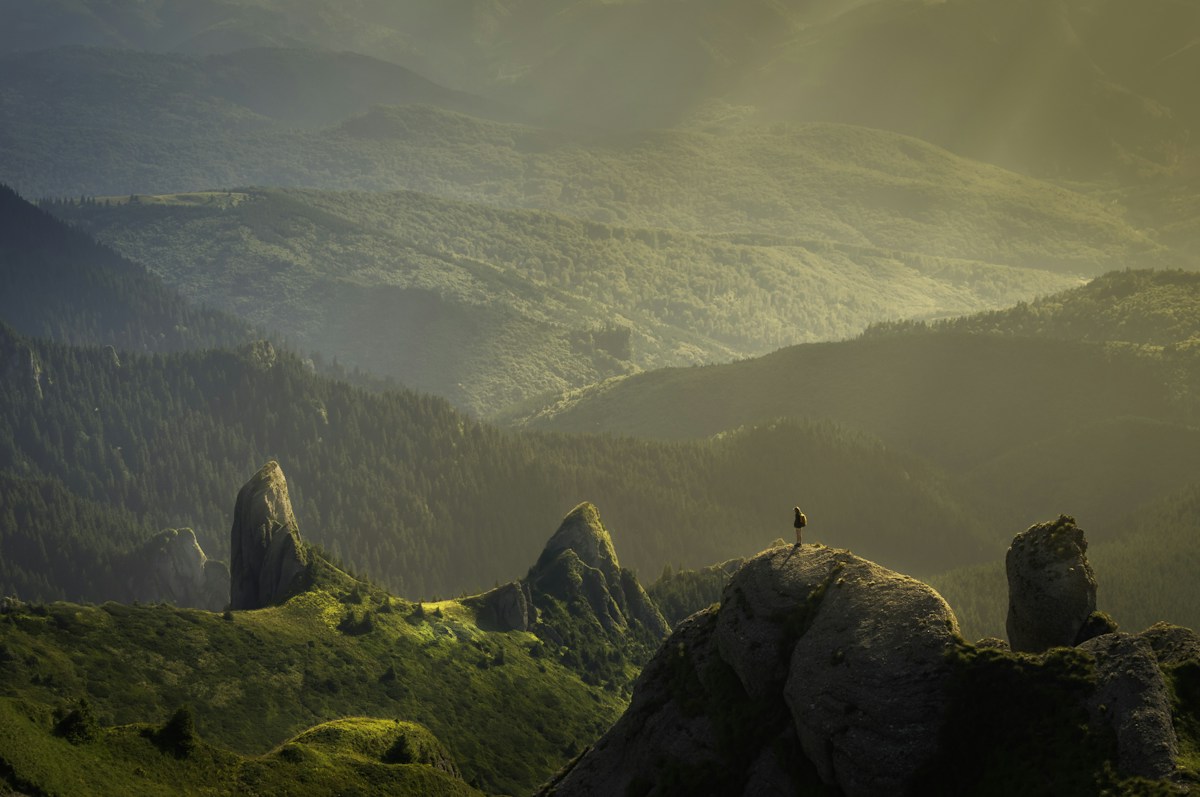
Langtang Valley
The valley of glaciers, closest to Kathmandu

Patan Durbar Square
Malla-era stone and gilt where Hinduism and Buddhism share the same courtyard

Pashupatinath Temple
Hindu temple in Kathmandu
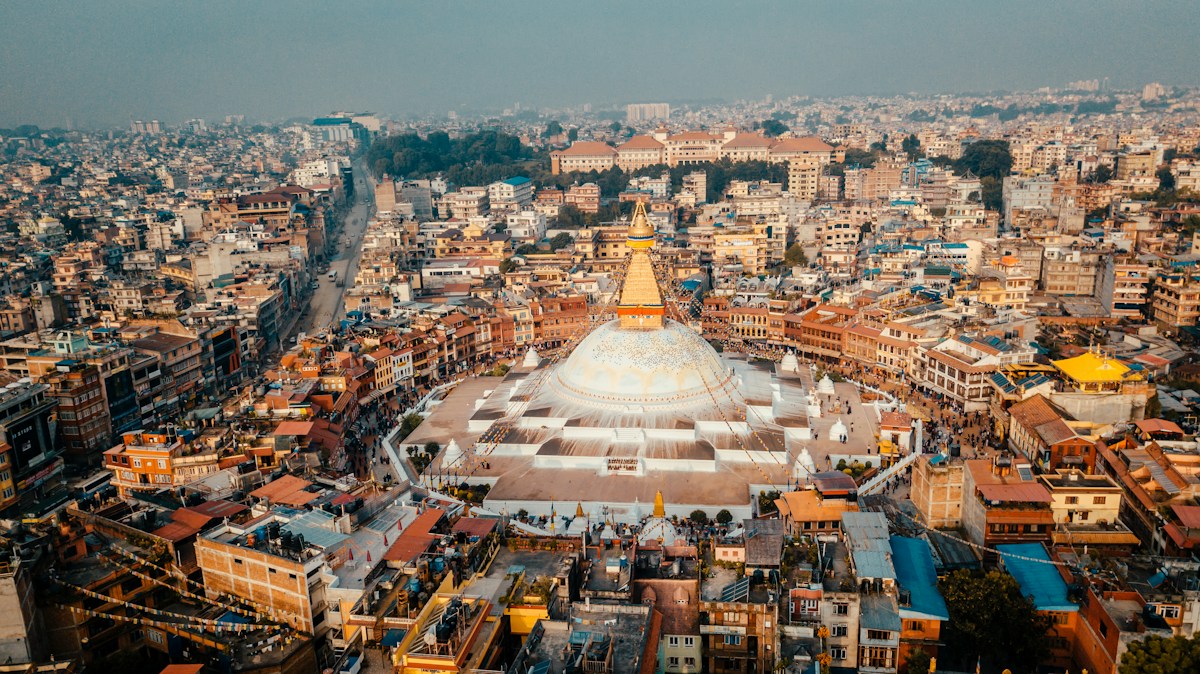
Kathmandu
Where ancient temples meet mountain horizons