Most travelers see the same Nepal: Thamel, Pokhara, the standard Everest and Annapurna routes. But Nepal is bigger and stranger than the highlight reel suggests. The country has corners that almost no foreign visitor reaches — ancient pilgrimage trails, unmapped wildlife reserves, Tibetan Buddhist enclaves locked in time, alpine lakes named in Hindu cosmology.
These ten places aren't secrets exactly. They're just inconvenient, or culturally specific, or simply unmarketed by the tourism boards that prefer to push Everest. Which is precisely why they're worth your trouble.
Save this guide. Plan around it. Then go before the next guidebook discovers them.
Destination
Tsum Valley
Tsum Valley is a remote Himalayan valley located in the northern part of Gorkha District, in Gandaki Province, Nepal. Nestled within the Manaslu Conservation Area, the valley lies close to the Tibetan border and is known for its unique cultural heritage, sacred Buddhist monasteries, and pristine landscapes. Tsum Valley has been described as a "hidden valley," or Beyul, a concept in Tibetan Buddhism referring to a place of spiritual refuge. This Valley is also known as A Land of Buddhist Impark.
A medieval Tibetan kingdom hidden behind the Manaslu range, only opened to outsiders in 2008. Tsum maintains its own dialect, its own monastic schools, and a strict non-violence pact dating to the 17th century — meaning no hunting, no animal slaughter, no fishing within the valley. The 14-day trek there from Arughat passes through eight gompas and ends at Mu Gompa near the Tibetan border. Restricted area permit required. Expect almost no other trekkers, even in peak season.
Destination
Koshi Tappu Wildlife Reserve

Koshi Tappu Wildlife Reserve represents one of Nepal's most important wetland ecosystems, yet remains largely unknown to international travelers. Spanning 176 square kilometers across the Terai flatlands of eastern Nepal, the reserve protects extensive reed beds and freshwater marshes fed by the Kosi River's seasonal floods. Designated as a Ramsar site in recognition of its global wetland significance, Koshi Tappu serves as a critical refuge for migratory birds and aquatic wildlife across the region. What makes this reserve particularly significant is its role as the last stronghold of Nepal's wild water buffalo population—a species that once roamed the subcontinent in far greater numbers. The reserve also supports numerous other species adapted to wetland environments, from fish populations to various bird species that make seasonal migrations across South Asia. Visitors to Koshi Tappu experience a landscape quite different from Nepal's better-known mountain destinations. The flat, water-dominated terrain offers opportunities for bird watching and wildlife observation, particularly during migration seasons when the reserve becomes especially active. The reserve provides genuine insight into conservation efforts in the Terai region and the ecological importance of wetland protection—topics often overlooked in standard Nepal tourism narratives. Access requires some planning, as the reserve's remote location in Sunsari, Saptari, and Udayapur districts means it's less developed for casual tourism than major national parks. This relative isolation is, however, part of its appeal for travelers seeking less-trafficked natural areas.
Nepal's birding capital — 514 recorded species pack into 175 sq km of marshland, grassland, and Sapta Koshi floodplain. Migratory waterfowl arrive in winter from Siberia and Mongolia. The reserve also shelters the last wild population of arna (wild water buffalo) in Nepal, plus Gangetic dolphins in the river. Stay at Koshi Camp for early-morning boat safaris. The eastern terai's flatness makes this accessible year-round, unlike most Nepal wildlife sites.
Destination
Tatopani Myagdi
Bhurung Tatopani is a village development committee in Myagdi District in the Dhaulagiri Zone of western-central Nepal. At the time of the 1991 Nepal census it had a population of 843 people living in 182 individual households. Singa Tatopani Kunda in Myagdi district is known as a natural remedy. There is a belief that if you take regular bath in a pool of hot water of 50 degree Celsius for a week, you will be cured of diseases like joint, skin, gastritis, nerves, bath, back pain, limb swelling, stomach swelling and goiter. The water in the pool smells like birch bark.
Steaming sulphurous hot springs at 1,190m, sitting on the old Kali Gandaki trade route between Beni and Mustang. The locals have been bathing here for centuries — temperatures range from comfortable to genuinely scalding. Most Annapurna Circuit trekkers blow past without stopping, which is exactly why the village stays unhurried. Book a guesthouse for one night, soak, eat dal bhat, watch the river. The classic Nepali wind-down.
Destination
Helambu

Helambu is a region of highland villages in Nepal, about 80 km from Kathmandu. It is the home of the Hyolmo people. The word Yolmo derives from the word Helambu. The Helambu region begins at the Lauribina La pass and descends to the Melamchi valley. Helambu is famous for its sweet apples and artistic Buddhist monasteries and it is a Buddhist pilgrimage site.
A cluster of Hyolmo Sherpa villages northeast of Kathmandu, sitting between 1,500m and 3,500m. The trek loop takes 7-9 days from Sundarijal, low enough that altitude isn't an issue. You stay in traditional Hyolmo homes, eat Tibetan food, and visit Tamang and Sherpa monasteries that predate Helambu's appearance in any guidebook. Excellent shoulder-season option when higher treks are weather-shut.
Destination
Dhorpatan Hunting Reserve

Dhorpatan Hunting Reserve represents one of Nepal's most remote and ecologically significant alpine areas. Established in 1987, this 1,325-square-kilometer reserve sprawls across the Dhaulagiri Himal in western Nepal, encompassing portions of Rukum, Myagdi, and Baglung districts. The reserve's elevation ranges from 2,850 to 5,500 meters, creating distinct ecological zones from subalpine forests to high-altitude meadows and barren terrain. What distinguishes Dhorpatan is its relative isolation. Unlike more accessible protected areas, this reserve remains largely off the mainstream trekking circuit, preserving its alpine ecosystems with minimal infrastructure and limited visitor numbers. The landscape supports specialized mountain fauna adapted to extreme elevations and harsh conditions. The expansive meadows and open terrain offer expansive vistas across the Himalayan range. Trekking here demands genuine mountain experience and fitness. Routes traverse high passes, exposed ridges, and alpine terrain where weather can change dramatically. The absence of extensive trail networks or commercial infrastructure means visitors encounter the Himalayas on their own terms—quiet, unmediated, and genuinely remote. Dhorpatan appeals to experienced trekkers seeking solitude and uncompromised wilderness rather than scenic comfort. The reserve's primary value lies in ecological preservation rather than tourist infrastructure. Those equipped for alpine trekking and weather variability will find landscapes of profound emptiness and clarity.
Nepal's only legal hunting reserve, and one of its strangest landscapes — vast high-altitude meadows at 3,000-4,000m, snow leopards, blue sheep, and Himalayan tahr. The reserve technically allows controlled trophy hunting, an arrangement that's controversial but transparent. Visitors who aren't hunting can trek through stunning, almost-empty terrain. Permit access via Burtibang.
Destination
Khaptad National Park

Khaptad National Park is a serene high-altitude sanctuary nestled in the remote hills of Sudurpashchim Province, featuring expansive alpine meadows, dense rhododendron forests, and sweeping Himalayan vistas. This lesser-known park offers trekkers and nature enthusiasts an authentic wilderness experience far from crowded tourist routes, with opportunities to spot wildlife including musk deer, Himalayan black bears, and numerous bird species. The park's spiritual significance, marked by sacred sites and local pilgrimage traditions, blends seamlessly with its ecological importance as a biodiversity hotspot.
A sacred plateau in far-western Nepal, named after the Hindu sage Khaptad Baba who meditated here for 50 years. The park covers 225 sq km of rolling alpine meadows at 3,000m+, scattered with shrines, the source of four major rivers, and 224 species of medicinal plants documented by Khaptad Baba himself. Reaching it requires real commitment — fly to Dhangadhi, then a long drive and 3-day trek. Almost no foreign visitors.
Destination
Bhairab Kund

At roughly 4,200 metres on the border ridge between Nepal and Tibet, Bhairab Kund sits in a bowl of rock and thin air that feels genuinely remote even by Himalayan standards. The lake takes its name from Bhairab — the fierce, skull-garlanded manifestation of Shiva — and the association is not decorative. Pilgrims have been making the approach for centuries, and the religious atmosphere here is less curated than at more accessible shrines. Small stone structures and prayer flags mark the shoreline, and offerings accumulate at the water's edge with no management infrastructure to tidy them away. The approach from the Sindhupalchok district side involves a multi-day walk through mid-hill terrain that transitions sharply into alpine meadow and then bare scree. Villages along the route — largely Tamang and Sherpa communities — maintain the trail primarily for their own seasonal movements and for the pilgrim traffic that peaks around Janai Purnima in late July or August, when the lake draws the largest concentrations of devotees from both Nepal and the Tibetan side of the border. The lake itself is small and dark, fed by snowmelt, and freezes over in winter. Its surface reflects the surrounding ridgeline with an unsettling clarity on calm mornings. The border location means the political geography is as significant as the physical one — this is a crossing point with historical depth, and the terrain carries the particular quality of places that have served as thresholds between cultures and states for a long time. Wildlife in the surrounding area includes Himalayan tahr and various high-altitude birds, though the ecosystem is fragile and the pilgrimage season concentrates considerable foot traffic in a short window. Outside that window, the trail sees almost no one. Acclimatisation is not optional — the gain in elevation from the trailhead is substantial, and the lake sits high enough that acute mountain sickness is a real risk for anyone moving too quickly from Kathmandu.
A sacred alpine lake at 4,250m on the Tamang Heritage Trail extension. Pilgrims trek here during Janai Purnima in August for ritual bathing — but it's accessible year-round to anyone willing to climb. The lake sits at the foot of Phurbi Chyachu peak, dramatic and rarely photographed. Combine with the standard Tamang Heritage loop for a 9-10 day cultural-spiritual circuit.
Destination
Panch Pokhari

Panch Pokharii is a group of 5 (panch) Hindu holy lakes in the Sindhupalchowk District of Nepal. The lakes are a popular destination for Hindu and Buddhist pilgrims during Janai Purnima.
Five sacred high-altitude lakes at 4,100m — Nepal's 9th highest wetland — accessible via a 7-day trek from Chautara. Hindus and Buddhists both consider these waters holy; Shiva is said to have rested here. The trek passes through Tamang and Sherpa villages, mostly untouched by tourism infrastructure. Best done in October-November after monsoon, when the lakes mirror the surrounding peaks.
Destination
Sirubari Homestay
At roughly 1,800 metres above sea level in the Syangja district of Gandaki Province, Sirubari holds a particular distinction: it was established in 1997 as Nepal's first officially registered community homestay village, predating the now-common model by years. The village sits on a ridgeline with unobstructed views north toward the Annapurna and Dhaulagiri ranges, and south across terraced farmland that drops toward the Kali Gandaki valley system. The resident Gurung community here has structured tourism deliberately around cultural preservation rather than volume. Visitors sleep inside family homes, eat dal bhat and local millet preparations at the family table, and wake to the same schedule the household follows. There are no hotels, no restaurant strips, and no souvenir markets — the absence of these things is precisely the point. The Gurung are one of Nepal's prominent hill communities with strong ties to the British and Indian Gurkha regiments, and conversations with elder residents often carry that military history alongside farming traditions, shamanic Bon-influenced practices, and the Tamu Lhosar new year celebration. The trail up from Phedikhola or Waling takes between two and four hours depending on the route and fitness level, passing through terraced rice and millet fields before the ridge opens up. The walk itself is part of the experience — there is no road access to the village, which has kept the pace of change slower than comparable sites. Sunrise from the ridge, when Machhapuchhre and the Annapurna massif catch early light, is the visual centrepiece most visitors describe first. Practically, bookings are coordinated through the village homestay committee, which assigns families on a rotation to distribute income equitably. Rates are fixed and modest, covering accommodation and full board. Electricity is available but intermittent; carry a headlamp. The community has invested in trail maintenance and basic sanitation infrastructure using tourism revenue, making Sirubari a frequently cited case study in community-led tourism management across South Asia.
Nepal's pioneer community homestay village, started in 1997 by the Gurung community to share their culture authentically and keep tourism revenue local. You stay in family homes, eat with the family, learn local crafts, and attend evening cultural performances that are for guests but also for the community itself. A working model that other Nepali villages now emulate — but Sirubari was first, and remains the most polished.
Destination
Badimalika Temple
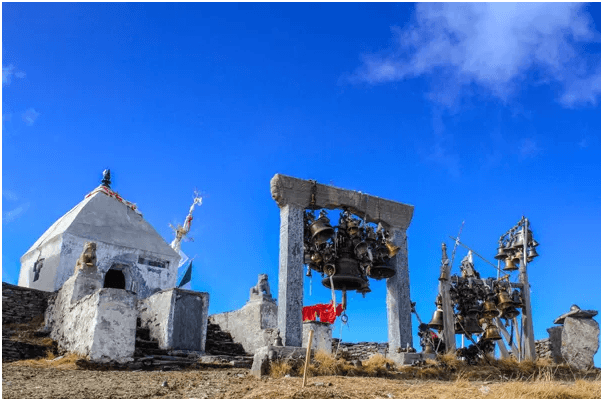
Badimalika Temple stands as one of Nepal's significant Hindu pilgrimage sites, nestled in the remote terrain of Triveni Municipality in Bajura district. Dedicated to Bhagwati, a fierce manifestation of the divine feminine in Hindu tradition, this temple draws devotees from across the region who undertake sometimes challenging journeys to reach its sacred grounds. The temple's importance extends beyond its religious significance—it represents a unique administrative arrangement where two priests from neighboring Bajura and Kalikot districts jointly serve the shrine, reflecting the interconnected spiritual geography of Nepal's western hills. This collaborative stewardship speaks to how sacred sites often transcend district boundaries in the Nepali imagination. Malika Chaturdashi, the temple's major festival, transforms the site into a gathering point for pilgrims and local communities. During this observance, the temple becomes animated with ritual, devotion, and the social fabric that binds these mountain communities together. For travelers willing to venture beyond well-trodden paths, Badimalika offers an authentic encounter with Hindu pilgrimage culture and the devotional landscape of Nepal's Sudurpashchim Province. The temple's remote location means fewer international tourists and a more genuine glimpse into how local communities engage with their sacred spaces. The journey itself—through Nepal's challenging but rewarding terrain—becomes part of the spiritual experience.
A 4,200m hilltop temple in far-western Nepal dedicated to the goddess Bhagawati. Hindus pilgrim here during Janai Purnima — the trek up takes 2-3 days from Martadi, with sweeping views of the Saipal range. Off-season, you'll have the temple, the alpine meadows, and silence to yourself. Among the few places in Nepal where you can witness major Hindu pilgrimage without the tourist infrastructure that surrounds Pashupatinath or Muktinath.
These ten places have one thing in common: they reward effort. Nepal's headline destinations are spectacular but well-traveled. The country's depth — its religious geography, ecological complexity, ethnic diversity — only opens up when you go further than a guidebook recommends.
Start with one. The hardest part is the first day of figuring out logistics. After that, you're just walking.
